A sleep apnea diagnosis starts with a sleep study. This test records what your body does while you sleep. If your doctor suspects sleep apnea, they will refer you to a sleep specialist. The specialist then chooses the type of sleep test that fits your situation.
Overall, the process is straightforward. However, many people feel anxious because they do not know what to expect. This guide explains how sleep apnea is diagnosed, what happens during a sleep study, and what comes next.
What Is a Sleep Apnea Diagnosis and Who Makes It?
A sleep specialist makes a sleep apnea diagnosis. This is a doctor trained to identify and treat sleep disorders. Your family doctor is often the first to notice warning signs. For example, they may ask about loud snoring, gasping during sleep, or daytime fatigue. They can then refer you for a formal sleep test.
The specialist reviews your symptoms and medical history first. They may also use a screening tool, such as the Epworth Sleepiness Scale. It measures how sleepy you feel during the day. Based on this, they decide which type of sleep test is right for you.
You can also learn what sleep apnea is and how it affects your body on the Northern Respiratory website. A questionnaire alone cannot confirm a sleep apnea diagnosis. Clinicians confirm it with a sleep test. Therefore, getting tested is the first and most important step.
Two Types of Sleep Studies: In-Lab vs. Home Sleep Test
There are two main types of sleep tests. Each works differently. Your sleep specialist chooses the one that fits your health and symptoms.
In-Lab Polysomnography (PSG)
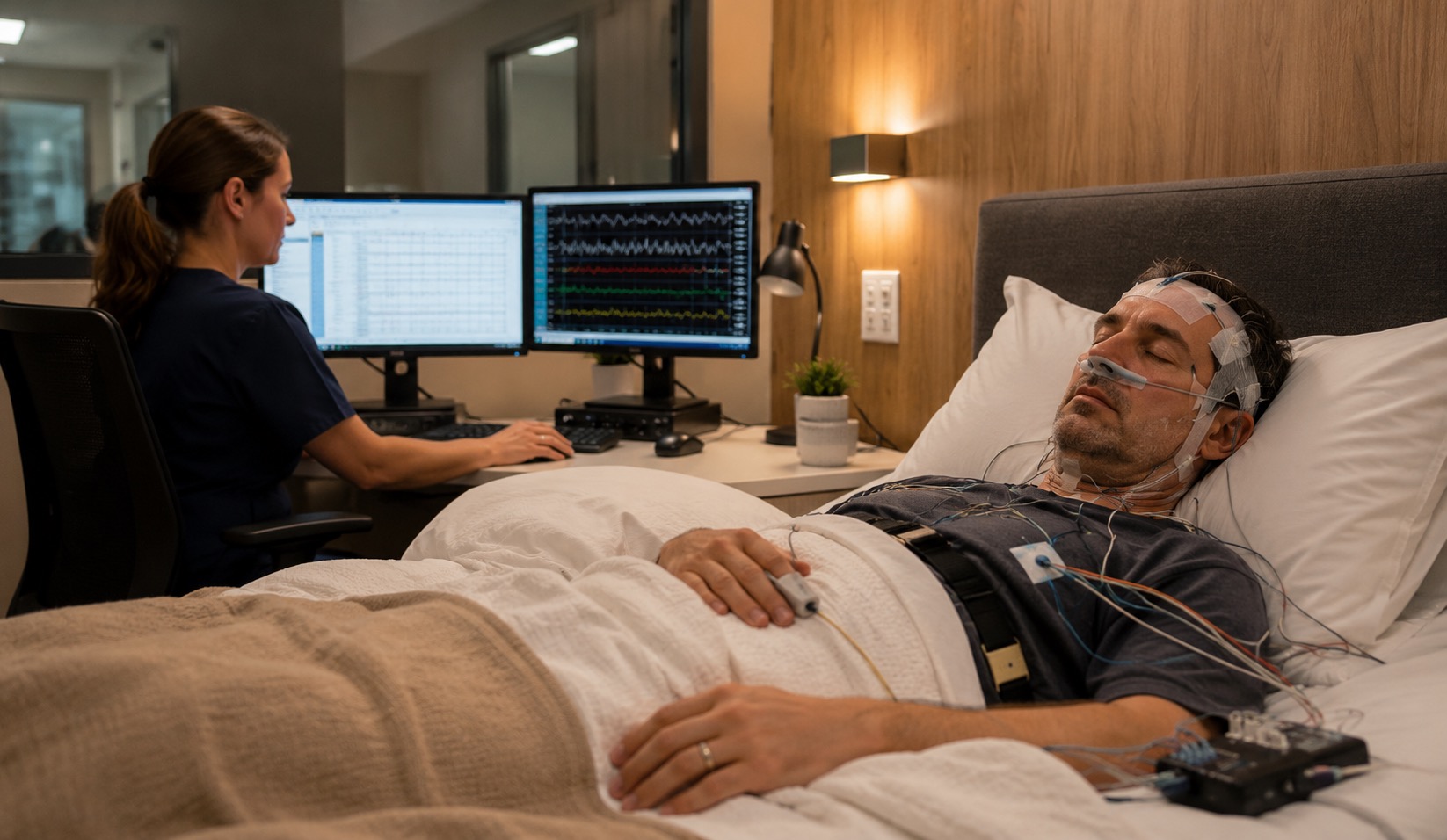
A polysomnography is an overnight test at a sleep clinic. You arrive in the evening and sleep in a private room. Sensors monitor your brain waves, oxygen levels, heart rate, breathing, and body movements. A registered polysomnographic technologist monitors the data through the night.
This is the most detailed type of sleep study. It can also help identify sleep disorders other than sleep apnea.
The room is quiet and darkened, much like a hotel room. You are not confined or restricted. Many people fall asleep even with the sensors attached. The overnight study can take about 8 to 10 hours.
Home Sleep Apnea Test (HSAT)
A home sleep apnea test is a simpler option. It uses a small device with fewer sensors, typically measuring airflow, breathing effort, and oxygen level. Your clinic explains how to attach it, usually on your finger, chest, and nose. You sleep as normal and return the device so a specialist can review the data.
The American Academy of Sleep Medicine describes home testing as one option for uncomplicated adults. These adults are at increased risk of moderate to severe obstructive sleep apnea. Because a home test records less information, it can miss other sleep disorders. If a home test is negative, inconclusive, or technically poor, the guideline advises an in-lab study. Your sleep specialist decides whether a home test fits your health.
In-Lab Sleep Study vs. Home Sleep Test: A Quick Comparison
| Feature | In-Lab Sleep Study (PSG) | Home Sleep Test (HSAT) |
|---|---|---|
| Location | Sleep clinic or sleep lab | Your own home |
| Supervision | A technologist monitors the test | Usually unattended, so you attach the sensors after instructions |
| Data collected | Broad: brain waves, breathing, oxygen, heart rate, and body movement | Fewer channels: typically airflow, breathing effort, and oxygen level |
| Best for | Cases where your specialist needs the full picture, including complex or unclear cases | Some uncomplicated adults at increased risk of moderate to severe OSA, if your specialist chooses it |
| Duration | One night at the clinic | Usually one night at home |
| Results reviewed by | Sleep physician | Sleep physician |
| Ontario ADP funding evidence | ADP policy calls for a level 1 in-lab study at an ADP registered sleep lab | A home test does not replace that requirement. Ask your clinic about current ADP rules. |
How to Prepare for Your Sleep Study
Preparing well helps your test reflect a normal night. On the day of your sleep study, wake up at your regular time. Eat your meals as usual and take your regular medications unless your doctor says otherwise. Additionally, avoid caffeine after noon and skip afternoon naps. Both can affect how quickly you fall asleep during the test.
If you are doing an in-lab study, wash your hair and skip styling products. Sensors need to stick to your scalp, and gels or sprays make that harder. For a home test, read the instructions before your test night. Your sleep clinic will give you written guidance in advance.
You are welcome to bring comfortable pyjamas, your usual pillow, and any personal items that help you sleep. The goal is to make the night as close to normal as possible. For more detail, visit our page on sleep studies and funding in Ontario.
What Happens After the Sleep Study: Results and Next Steps
After your test, a sleep physician reviews the data. This usually takes several weeks, depending on the clinic. The physician looks at a measure called the Apnea-Hypopnea Index (AHI), which counts breathing disruptions per hour of sleep. A higher AHI generally points to more severe sleep apnea.
Next, your sleep specialist discusses the results with you. Once your sleep apnea diagnosis is confirmed, they will recommend a treatment plan. For many people, treatment involves CPAP or BiPAP therapy, but your specialist makes that decision. You can explore how CPAP and BiPAP therapy works to understand what treatment involves.
In Ontario, the Assistive Devices Program (ADP) may help fund a CPAP or BiPAP system. ADP sets the eligibility rules. These include an assessment by a physician at an ADP registered sleep clinic. The rules also call for a level 1 in-lab sleep study that shows obstructive sleep apnea.
Your sleep specialist and clinic can tell you whether you meet the current criteria. If you qualify, Northern Respiratory takes care of the Ministry of Health application. We also help you work with your private insurance.
Finally, your sleep specialist and CPAP provider follow up to check that therapy is working. Many devices pair with an app that shows your sleep data. Treatment is not a one-time event. It is an ongoing process to help you sleep and feel better long term.
You can also browse CPAP machines available through Northern Respiratory. That gives you a sense of your options before your appointment.
Frequently Asked Questions About Sleep Apnea Diagnosis
How do I know if I need a sleep apnea test?
Common signs are loud snoring, waking up gasping, and feeling exhausted after a full night’s sleep. Morning headaches and trouble concentrating are also common. If you notice these signs, speak to your family doctor. They can refer you to a sleep specialist for a proper evaluation.
How long does it take to get a sleep apnea diagnosis?
The timeline varies by region and clinic. After your doctor’s referral, you may wait for a specialist visit, then for your test, and then for your results. Some private sleep clinics may offer faster access. Ask your doctor or clinic about current wait times.
Does OHIP cover sleep studies in Ontario?
OHIP covers sleep studies at many hospital sleep labs for eligible patients with a referral. Private options may charge fees, so ask before you book. Once you have a confirmed diagnosis, ADP may contribute toward a CPAP machine if you meet its criteria. Northern Respiratory can guide you through the funding and insurance steps.
What is the difference between a sleep specialist and a sleep apnea doctor?
These terms are often used interchangeably. A sleep specialist is typically a respirologist, neurologist, or other physician with additional training in sleep medicine. They diagnose and treat sleep disorders. Your family doctor is not a sleep specialist but can refer you to one.
Take the Next Step Toward Answers
A sleep apnea diagnosis begins with one step: talking to your doctor. From there, a sleep specialist guides you through the right sleep test and explains your results. Treatment options exist once you have answers, so getting tested is worth it.
If you are ready to move forward, contact Northern Respiratory to find a sleep clinic near you. We have clinics in Sudbury, Thunder Bay, North Bay, Sault Ste. Marie, and Kenora.

